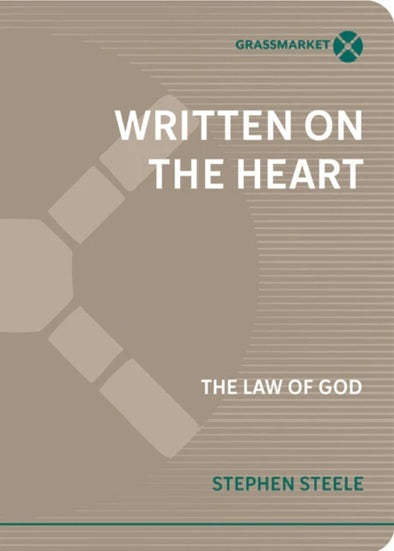
In the book, Stephen Steele mentions that, when he told a friend that he was writing a book on the Law of God, she “asked if [he] could write a book about the gospel instead.” (p138)
And the suggestion that you should read a book on the Law might strike the same note in your mind, that you’d possibly rather read a book on the gospel instead. But in Written on the Heart, Stephen proves throughout with charm, and warmth, and clear pastoral application, that there are irreplaceable riches for our Christian lives to be found in the Law of God. Stephen’s goal is obviously that, with the psalmist and the apostle, we would be moved to say, “How I love your law! I delight in the law in my inner being!’ (p6)
For full disclosure, I should say that I know Stephen pretty well — we minister in the same town, and we, our wives, and our kids are all friends.
But there’s no feigning my genuine enjoyment of this book, especially considering the fact that I received a copy of Written on the Heart late on Friday evening, and had finished it before I went to bed on Saturday night. Have you ever read a book on the Law that was a bona fide page-turner?
Stephen’s writing is engaging and accessible, and filled with memorable illustrations that help the well-researched biblical theology and Christ-centred application to shine. I couldn’t help but smile when he took the classic threefold division of the Law into moral, ceremonial, and judicial, and compared it with the base set of Catan and the expansion packs you can purchase for it (p48).
The book tackles all the questions I most frequently come across in my pastoral ministry: why do we uphold some parts of Leviticus but not others? Isn’t it legalistic to expect Christians to follow God’s law? Didn’t Christ come to fulfil the law? Doesn’t the gospel change all that? Stephen carefully and clearly explains key concepts like the natural divisions in the law, the centrality of the Ten Commandments to our understanding of biblical morality, the not competing but ‘sweetly complying’ relationship between the Law and the Gospel, and the true definition of legalism and what it looks like. Those who have encountered the New Covenant Theology and the Progressive Covenantalism movements will also find a short but punchy introduction to how these approaches differ from the Reformed understanding of the biblical covenants.
And it does all of this using a language and a style that is absolutely accessible. It’s abundantly clear that an immense amount of reading and study went into the writing of this book, but it is not a book aimed at theologians or biblical scholars: this is a book for any Christian, and I would feel confident putting it into the hand of any churchgoer in the pew, expectant that they will understand and benefit from it.
Stephen also treats that perennial evangelical question of the Sabbath, and shows that a proper understanding of both the Law and the Gospel uphold Sunday Sabbath observance, and set the Sabbath in its true light as a beautiful gift from God, and not only a duty.
I’ve already recommended the book to several church members, and I fully intend to buy a few copies to give away.
You can order the book in the UK at the Covenanter Bookshop
and in the USA at Crown and Covenant.

