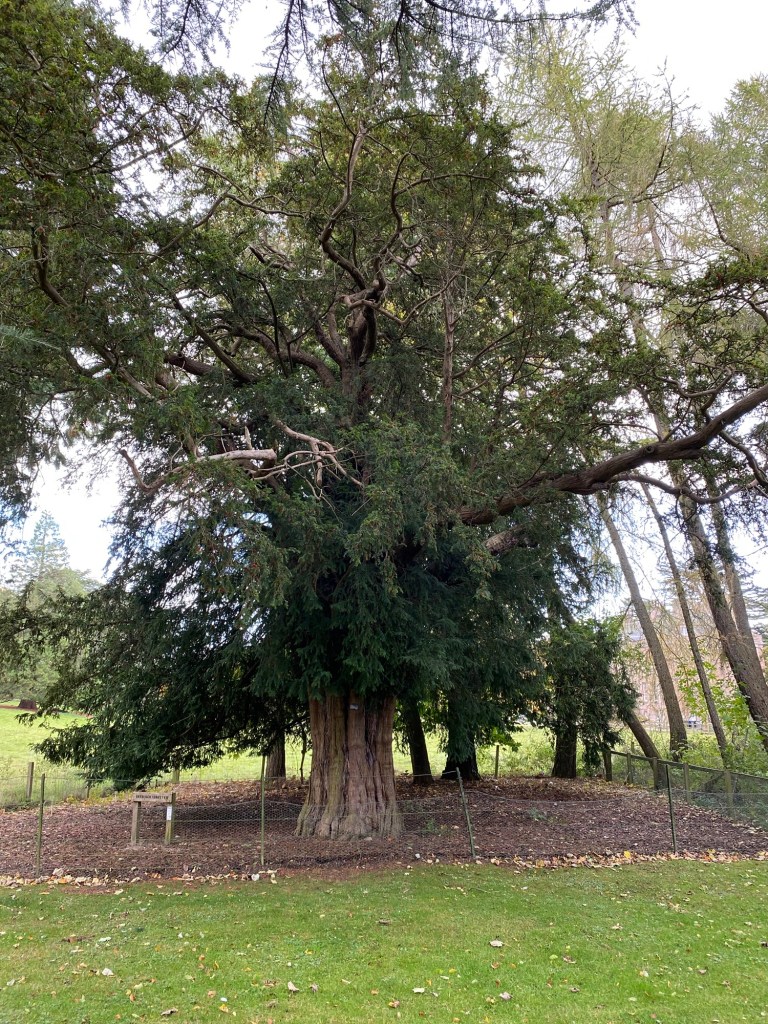
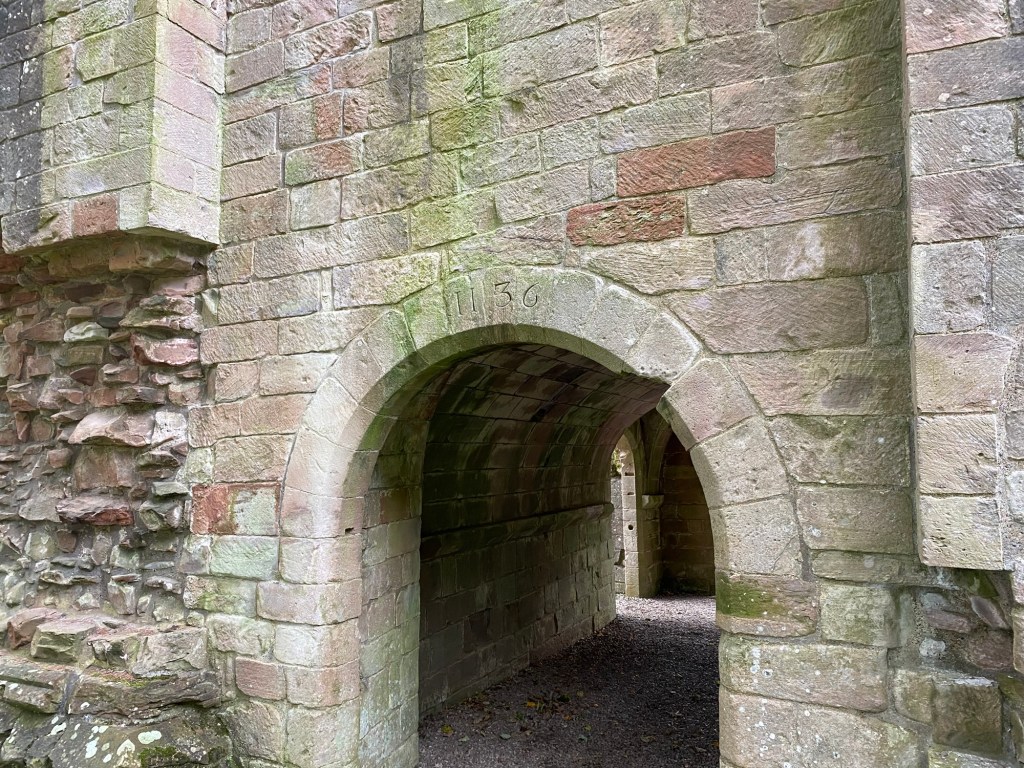
A yew tree was planted in 1136 in the grounds of Dryburgh Abbey, the same year as the first stone was laid in the abbey itself.
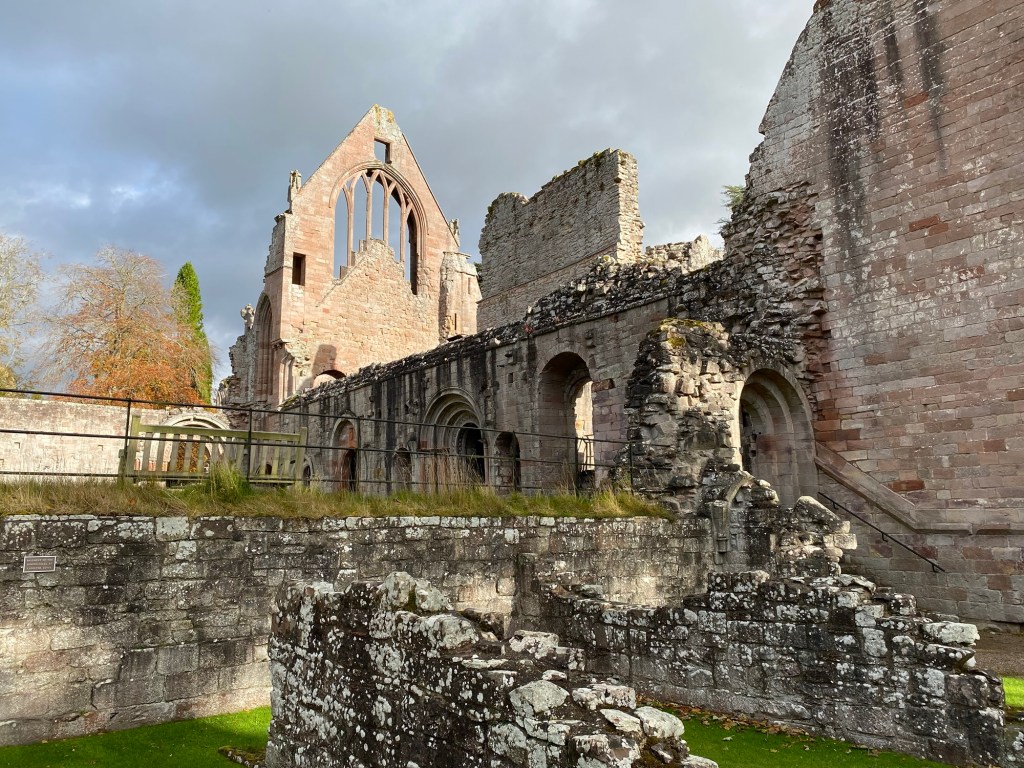
We had walked once round the abbey, had climbed the spiral staircase, had sung the Gloria Patri underground in the echoey chapter-house. I thought about the yew. The old stones.
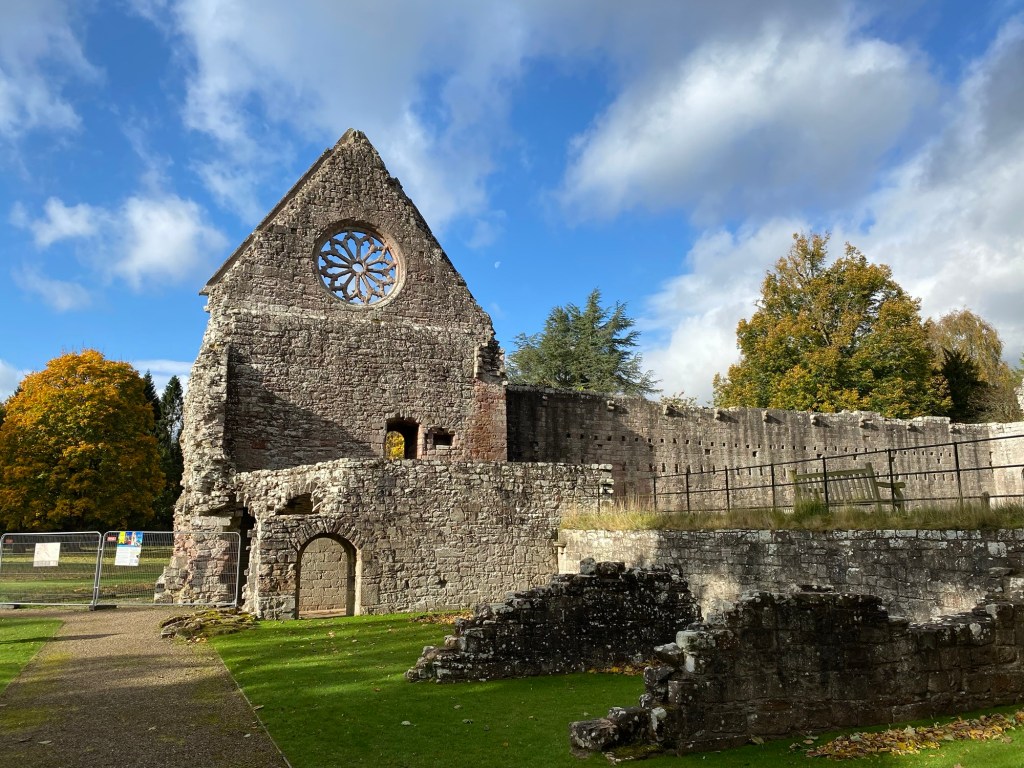
The kids were playing tig on the grass, their laughter and screams bouncing off the walls, ringing freely into the roofless sky, bothering the old lady who had paused to read a plaque. Would the monks have liked it? The noise? Savoured the sound of joy and mischief? Or would they too have scowled, and returned to their contemplations?
I called the kids over to me, on the bench in the open square where, once, monks chanted psalms and planted winter vegetables. I tried to explain to the kids how much has happened in the lifespan of this tree, what cataclysms and revolutions have unfolded even in our own land while these stones stood still and silent, patient. Inventions, uprisings, wars, kingdoms. How many lives of men have risen and passed.
I faltered, not knowing how to find a fingerhold in their minds for such thoughts. The printing press, William Wallace, the Reformation, Oliver Cromwell. Enlightenment. Union of Crowns. Steam. Empire. Electricity. The kids were unimpressed.
I too fell silent. They returned to their game of tig in the empty cloister.
 tregallion